Amy’s Upcycled Wedding Dress Alterations
Structural Reconstruction For a Creative Bride
.
.
Amy arrived with strong aesthetic clarity.
With a textiles background, she had already experimented independently with silhouette and fabric. She understood proportion. She understood concept. What she recognised – correctly – was that structural execution is an entirely different discipline.
This Upcycled Wedding Dress alterations project is not decorative modification. It is garment engineering.
.
Honouring Heritage Through Upcycling
.
.
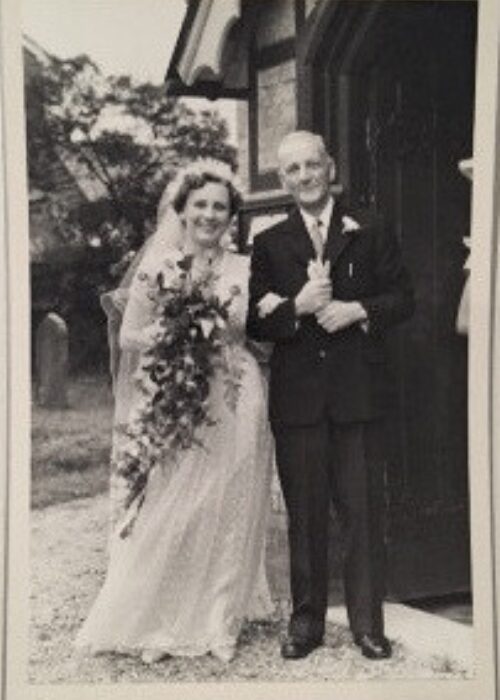
Amy’s vision was anchored in heritage and personal expression. Her background in textiles was rooted in her study of historical fashion, and her grandmother’s dress became the foundational inspiration for her own wedding attire. The original lace, cherished and timeless, was destined to be part of something new and beautiful.
Yet, the journey of designing an upcycled wedding dress is not without challenges. Amy knew the silhouette she wanted, but translation of her ideas into a wearable bridal gown required technical expertise beyond what she could achieve alone. After multiple attempts she realised the level of expertise required for a complex wedding dress reconstruction was beyond her scope. That’s when she reached out for professional help – the precise moment this became a collaborative couture project.
.
.
Explore more: Complex Structural Bridal Alterations
.
.
Creative Literacy Meets Structural Reality
.
She arrived having experimented independently and had begun some of the work herself but, as the project grew, the structural limitations of her skillset became evident.
This distinction matters because Upcycling is often misunderstood as “creative adjustment.” In bridal, it requires structural precision.
.
Rather than simply altering an old dress, this project was about integration and reinterpretation:
-
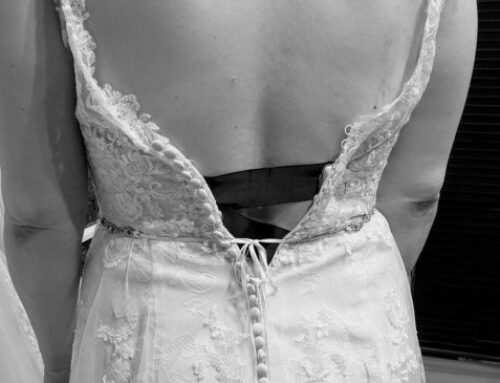
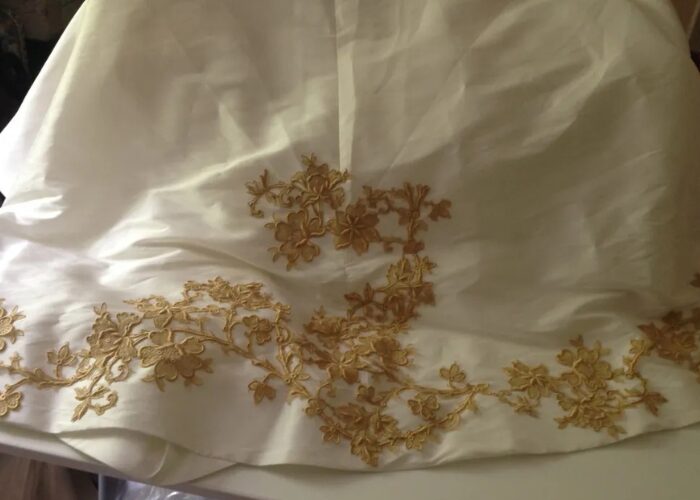
Amy had used the delicate French Alençon lace, inherited from her grandmother, to add contrasting detail to the belt and the hemline of the skirt.
-
Prior to starting the project, she had considered a bespoke silhouettes that combined the vintage elements with a modern bridal aesthetic.
.
The design journey was a blend of careful craft and thoughtful reuse, ensuring that nothing meaningful was lost in translation.
.
.
The Concept | Technical Consideration & Craftsmanship
.
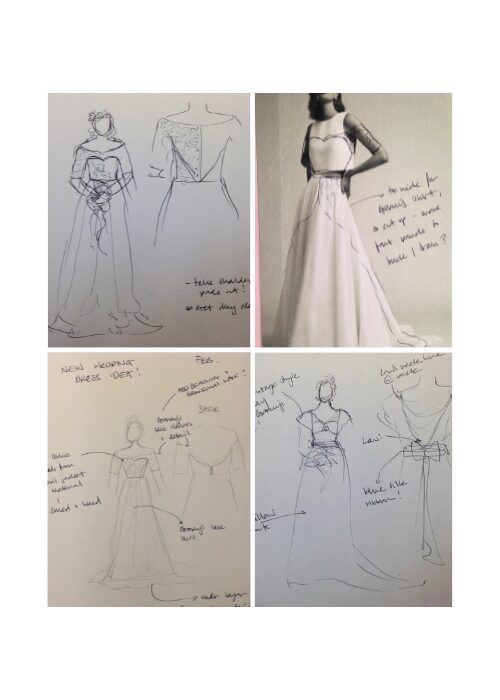
Midway through the project, Amy travelled abroad where she discovered a vintage brocade.
She then envisioned:
Incorporating a contrasting Corseted Bodice that aligned with the style and theme
The Brocade sparked further considerations such as a Full Princess Skirt in Duchess Satin
The Silhouette continued to evolve becoming more dramatic with a Duchess satin skirt introduced.
The duchess satin skirt introduced structural mass. The brocade bodice required anchoring reinforcement
.
Weight Distribution:
A true corseted wedding dress bodice must:
Be Fine-tuned to fit precisely through the ribcage
Support the weight and bust and provide anchor and balance
Bodice must integrate seamlessly with the skirt mass
Prevent skirt rotation or slipping
Be constructed with balanced tension across all seams
.
All the above elements require design planning at the outset, internal engineering and expertise – not surface stitching.
.
.
Explore More: Wedding Dress Alterations London
.
.
Initial Structural Assessment
.

.
The weight of the gown had changed, the textures and details more complex, the materials demanded specialist creative bridal alterations for which Amy initiated contact with the OM Bridal team.
.
Work included:
Assessing the weight ratio between both bodice and skirt
Stablizing the behaviour of the lace and the rapid fraying of the vintage brocade
Refitting of the Corset Construction
Reinforcement of Internal Boning Architecture
Waist anchoring system and strategic strengthening
Balancing and recalibration between bodice and skirt
Correction of the hemline and finalising the finished length
Remaking the hemline supporting structure
.
Unlike ready-to-wear alterations, vintage fabrics vary in fibre density, flex and strength due to ageing. Integration into a modern bridal silhouette requires testing for tensile strength and distortion risk. Stablisation of the materials is an important process which must be done before the first cut is made. .
.
.
Timeline
.
.
Total construction period: three months, including staged fittings and structural adjustments.
Note: Complex bridal reconstruction require additional time to test balance and support integrity.
.
.
Cost Transparency
.
Upcycling does not automatically reduce cost.
When structural corsetry and fabric integration are involved, labour complexity increases.
Clients choose upcycling for:
Design individuality
Fabric significance
Controlled silhouette execution
Not because it is cheaper.
.
Amy’s creative and collaborative approach demonstrated how creative bridal alterations can combine history, personal expression, and couture expertise without compromise.
.
.
A Celebratory Wiltshire Wedding
.
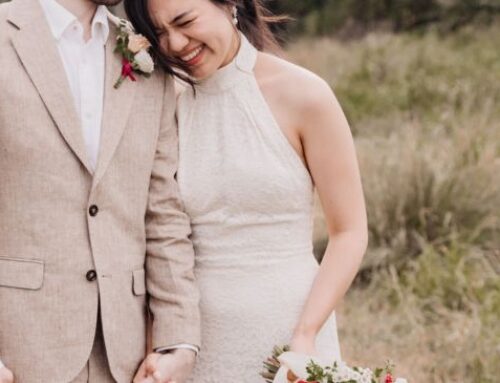
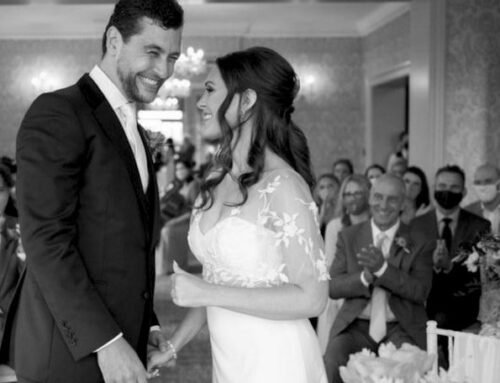
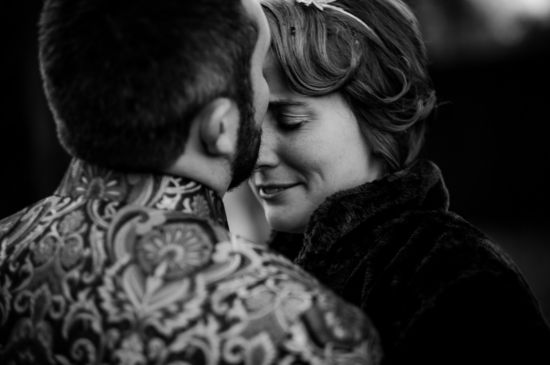
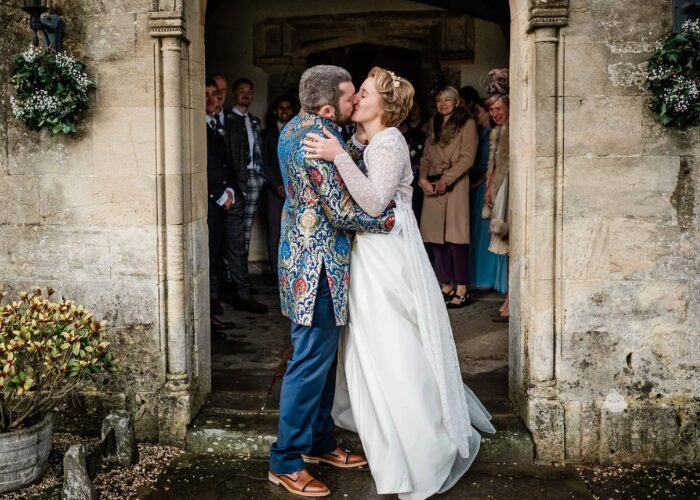
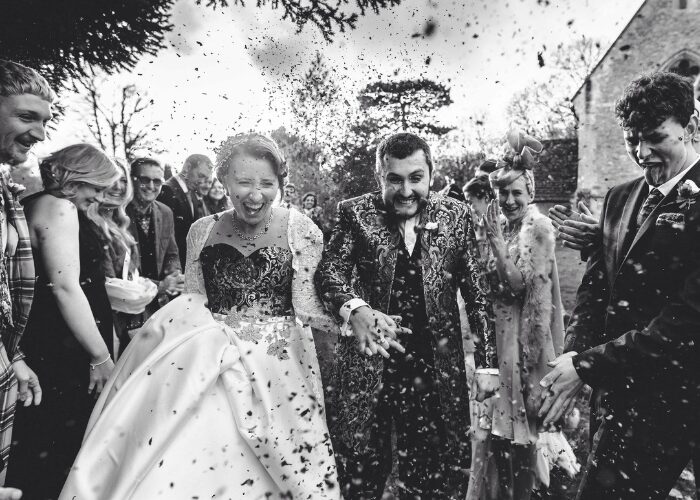
On her wedding day at St Michael’s Church in Kington, Wiltshire, Amy’s upcycled bridal outfit harmonised legacy and individuality. The celebration at Guyers House was a testament to thoughtful design and authentic self-expression.
.
.
.
Testimonial
I cannot recommend Cynthia highly enough – she is talented and honest and completely in her element … I came to her with a few jobs that I could not tackle on my own and she fixed them better than I could have imagined, with her years of experience she was able to make suggestions that I had not thought of and really saved the day!
For anything personal, unique and truly well made go and see her!
.
.
Explore More Case Studies : Jades Heirloom 1980s wedding dress redesign
.
.
.
Frequently Asked Questions About Complex Bridal Alterations
.
How much can a wedding dress be altered?
This depends on seam allowance, fabric integrity, and internal structure. Significant size changes may require panel reconstruction rather than simple seam adjustment.
Can vintage wedding dresses be safely altered?
Yes, but only after fibre condition and structural testing. Older silk and lace may be fragile.
Are structural alterations more expensive?
Yes. Internal corsetry, panel reconstruction, and weight redistribution require advanced pattern cutting and extended fitting time.
How many fittings are required for complex bridal alterations?
Typically 3–5 fittings depending on structural changes required.
Do you work with high-value designer gowns?
Yes. Specialist structural alteration experience is essential when working with couture and heavily constructed garments.
When should alterations begin?
For complex work, 4–8 months before the wedding is advisable.
.
.
Considering Heirloom Wedding Dress Remodelling?
.
If you are exploring the possibility of remodelling a vintage or inherited wedding gown, it is important to understand that the process requires:
.
Early consultation (minimum of 4 months before the wedding)
Technical assessment of fabric condition
A willingness to reconstruct, not simply alter
Multiple fittings
Emotional readiness for change
.
When handled correctly, heirloom remodelling allows you to honour your family’s story while stepping fully into your own.
.