Jade’s Mother’s 1980s Silk Gown, Reimagined
.
.
A Silk 1980s Heirloom Gown, Reimagined for a Modern Bride
When Jade arrived at our London couture alterations atelier with her mother’s 1980s silk crepe de chine wedding dress, it came with the expected and unmistakable era-defining drama of, oversized puff sleeves, a dropped waist, and an enormous train.
Her mother was excited.
Jade… was not.
Yet within that abundance of silk lay potential.
.
The Original Gown
.
.
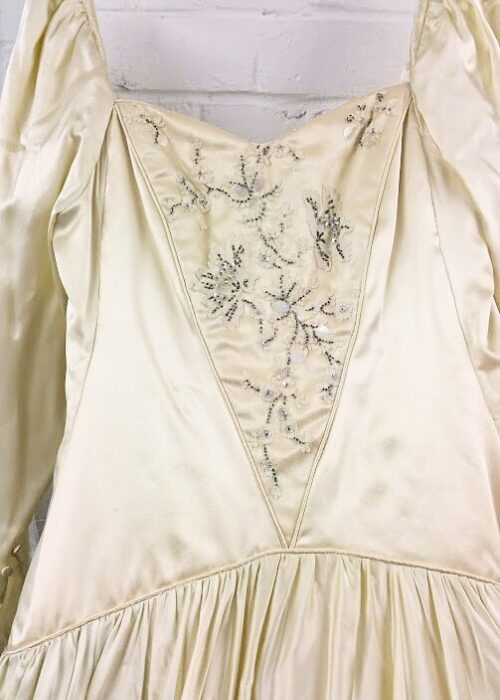
The dress had been beautifully made using silk crepe de chine – a luminous soft silk best known for its sheen and fluid softness.
Key Design features included:
-
Oversized puff sleeves
-
Dropped waist bodice
-
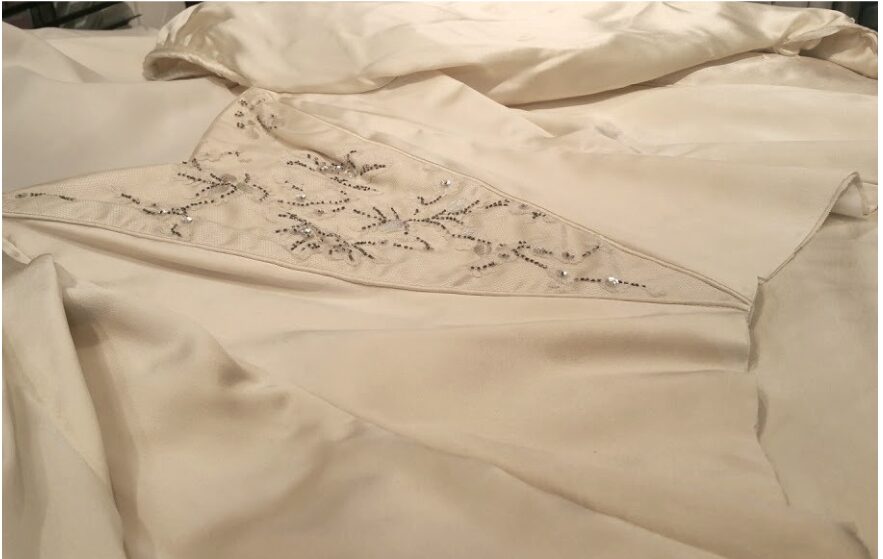
Delicately beaded inset panel from neckline to waist
-
Cuff length covered buttoning sleeves
-
A sweeping cathedral-length train
.
The vast quantity of fabric in the train was a major advantage considering modern prices for silk
The gown had been professionally cleaned before storage. However, time had not been kind. Several stains had oxidised and deepened, and their placement across central panels rendered large sections unusable. Spot cleaning was not an option – water marking can permanently damage silk of this nature.
A common fact, is that older gowns often contain weakened seams, oxidised fabrics, hidden structural damage or previous alterations that only become visible once construction begins
.
.
Before design could even begin, the real question was:
How much fabric was truly salvageable?
And, most importantly, What style of gown did Jade want?
To find the true answer required honest advice prior to proceeding to complete deconstruction.
.
The challenge
.
Technical Insight
Vintage silk crepe de chine can weaken significantly over time, particularly where garments have been cleaned, stored in fluctuating temperatures or exposed to oxidisation from invisible staining.
During heirloom wedding dress redesigns, fabric assessment becomes critical to the process. Certain areas may appear visually intact but no longer possess the tensile strength required to support modern reconstruction techniques without reinforcement.
At OM Bridal, each vintage gown is structurally assessed before redesign work begins to determine what can realistically and safely be preserved.
.
There were two core challenges:
1. Fabric Viability
The gown needed to be entirely unpicked, laid flat and assessed panel by panel. Only then could usable sections be identified and stabilised.
2. Design Direction
Jade was clear: she did not want to retain any visible elements of the original design.
No puff sleeves.
No dropped waist.
No 1980s silhouette.
This was not an “update.”
This was a full redesign.
.
.
BALANCING CONCEPT WITH EMOTIONAL SENSITIVITY REQUIRES HONESTY, PRACTICAL ADVICE & SKILLS?
.
.
The Reconstruction Process
.
Full Deconstruction
After carefully unpicking all panels, we assessed them individually for structural integrity, staining and damage.
Pattern & Mock-Up
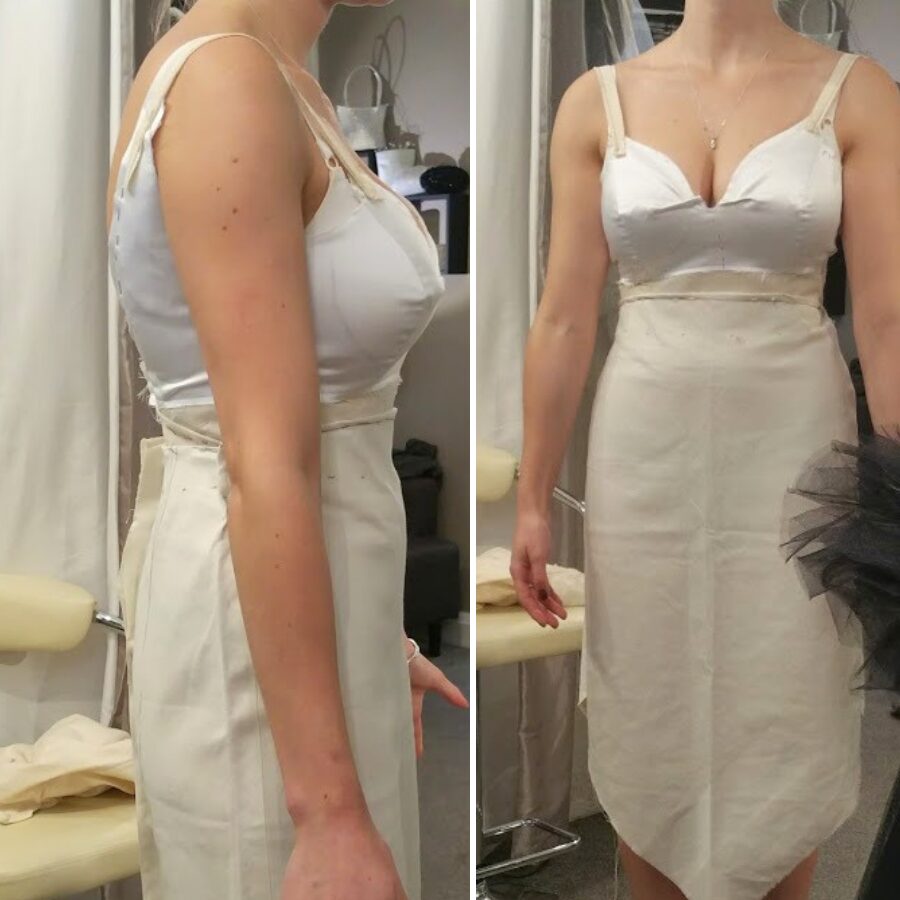
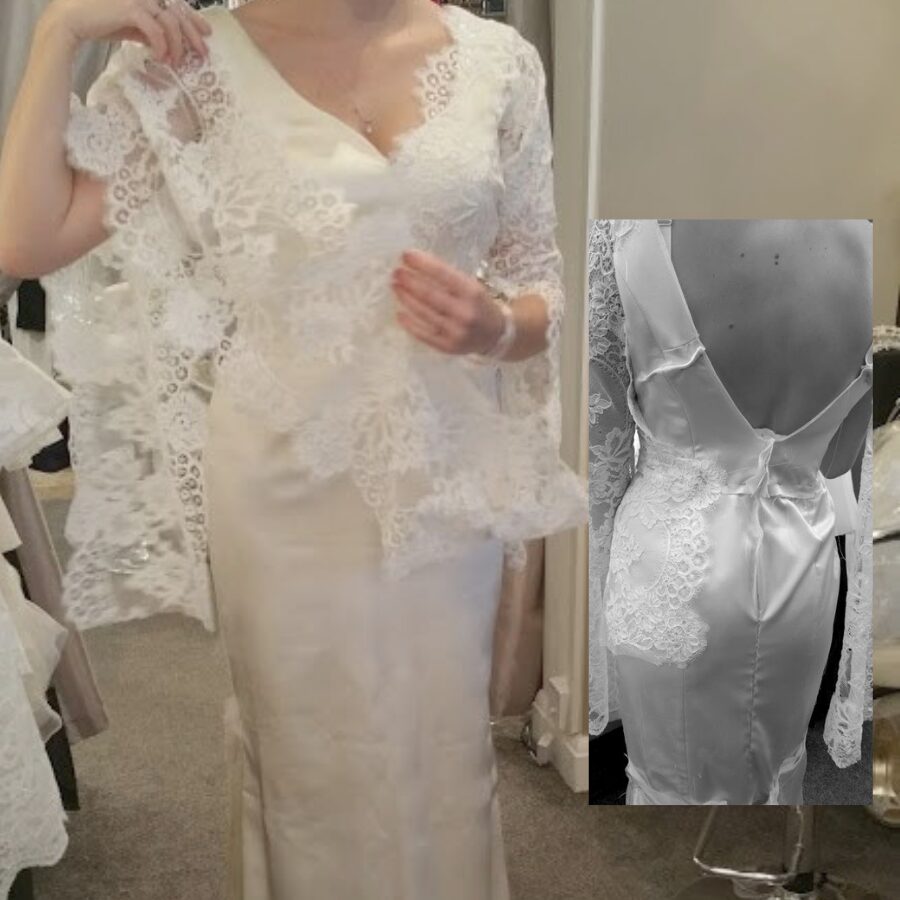
Following a discussion on the possiblities – given what useable sections of fabric would allow, a new pattern was drafted from scratch, followed by a calico mock-up of the silhouette. The calico mock-up, provided both mother and daughter with a tangible vision of what could be achieved within the usable fabric yield.
.
.
This stage of the process was critical – it replaced uncertainty with clarity.
.
Structural Reinforcement
Once approved:
The silk was mounted onto cotton lawn for strength and durability.
An internal corset was constructed to provide Jade with structured support.
The new silhouette was cut using the refined calico pattern as a blueprint.
This was not alteration.
This was skilled and detailed Complex Bridal Alterations London processes to produce couture level results.
.
Lace Selection
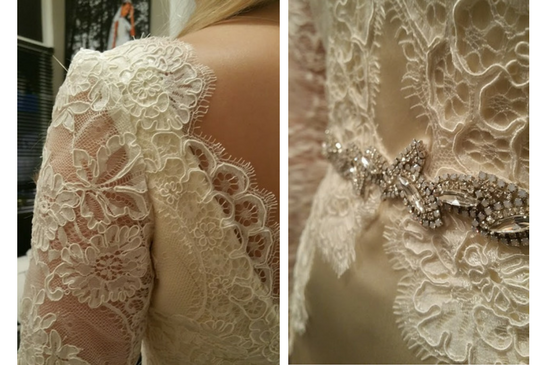
To modernise the tone and counteract the deeper ivory of the silk, I sourced a bold corded ivory lace with contemporary patterning.
The lace:
Freshened the overall aesthetic
Added texture and contrast
Framed the long sleeves beautifully
Elevated the gown into a modern design language
.
.
.
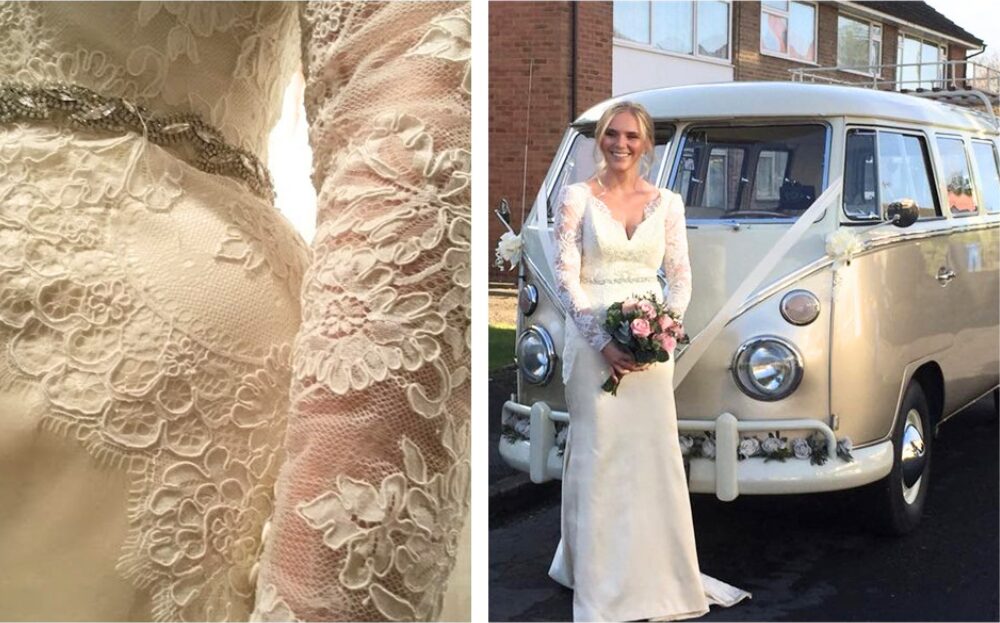
The Final Gown
.
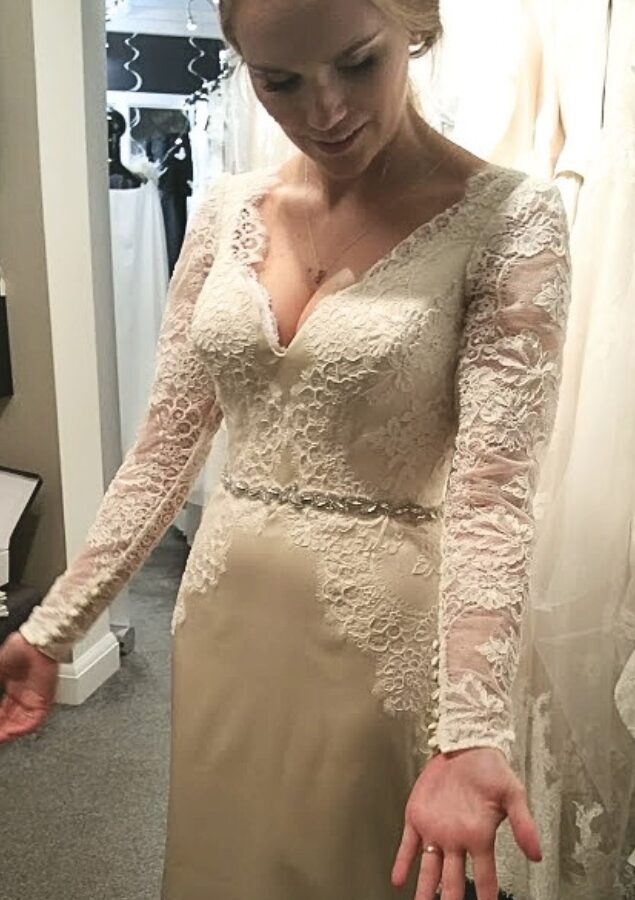
What began as an oversized 1980s statement became:
-
A structured, modern tailored silhouette
-
-
Elegant long lace sleeves
-
Discreet Modern corsetry
-
A refined shape that flattered Jade completely
The original silk remained the foundation – but the identity of the gown was entirely new.
.
.
What This Redesign Represents
.
This project highlights three important truths about heirloom redesign:
-
Abundant vintage fabric is an asset – even if parts are unusable.
-
Emotional preservation does not require aesthetic compromise.
-
Sustainable Upcycled bridal design can be both economical and couture.
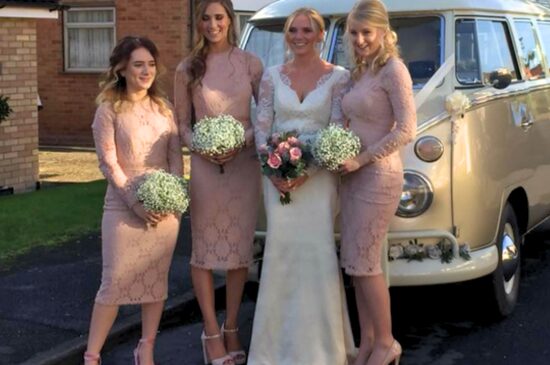
Jade did not wear her mother’s dress.
She wore a gown made from it.
And that distinction matters.
.
.
Considering redesigning a family wedding gown?
.
Explore the possibilities within our Heirloom Wedding Dress Remodelling.
.
LEARN MORE – sustainable bridal redesign
.
.